Table of Contents
I’ve installed hundreds of lighting fixtures over my career, and I can tell you one thing for certain: the hardware connecting your beautiful pendant light to the ceiling matters more than most people realize. That threaded brass pipe hidden inside the downrod isn’t just a connector—it’s what prevents your $300 fixture from crashing to the floor.
When you’re searching for “3/8-13 threaded brass pipe,” you’re likely in one of two situations: either you’re replacing a worn-out component in an existing fixture, or you’re building something custom and need reliable hardware that won’t fail. This isn’t a casual purchase—you need something that threads smoothly, holds securely, and won’t corrode over time.
Having used B&P Lamp’s threaded brass pipe in multiple installations, I’m going to walk you through exactly what to expect—the good, the limitations, and whether it’s the right choice for your specific project.
Key Takeaways
- Premium material comes with premium performance—solid brass resists corrosion far better than plated steel alternatives
- Fully threaded design offers maximum flexibility for adjustable height installations but requires careful handling
- The unfinished surface is both a pro and con—perfect for custom finishes, less ideal for out-of-box aesthetics
- Thread quality is consistently excellent—something that matters tremendously during installation
- Not the cheapest option, but delivers reliability that cheaper alternatives often lack
Quick Verdict
Best for: DIY enthusiasts doing quality lighting projects, electricians who value reliability over lowest cost, and anyone installing fixtures in humid environments where corrosion resistance matters.
Not ideal for: Budget-focused projects where appearance doesn’t matter, temporary installations, or situations where you need a specific finish right out of the package.
Core strengths: Excellent thread quality, genuine solid brass construction, corrosion resistance that actually works, and flexibility from the fully threaded design.
Core weaknesses: Higher price point than basic alternatives, unfinished appearance requires additional work if visible, and the fully threaded design can make precise positioning slightly trickier.
Product Overview & Specifications
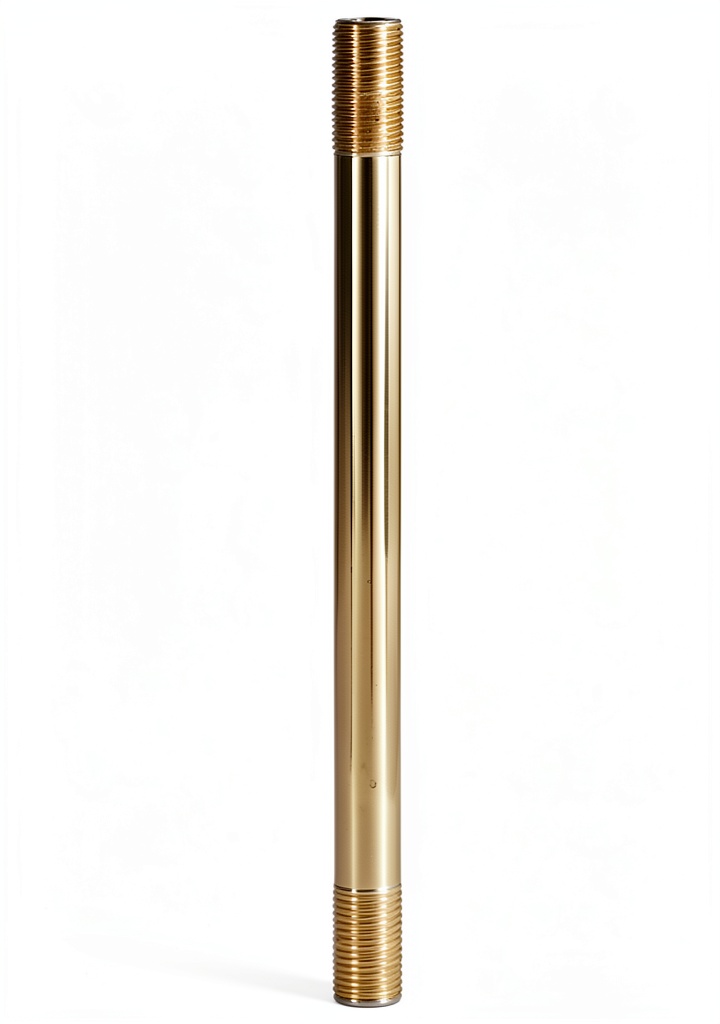
B&P Lamp’s threaded brass pipe sits in that sweet spot between consumer-grade hardware and professional lighting components. At first glance, it looks like a simple brass rod with threading—but the details matter tremendously in application.
What most people don’t realize until they’ve worked with lighting hardware: the 3/8-13 thread specification isn’t arbitrary. This is the standard size for many pendant light downrods, chandelier stems, and other hanging fixtures. The compatibility matters because trying to adapt between different thread sizes creates weak points in your installation.
| Specification | Details |
|---|---|
| Material | Solid Brass (not plated) |
| Thread Size | 3/8-13 (fully threaded) |
| Finish | Unfinished raw brass |
| Head Style | Flat head |
| Diameter | 0.38 inches |
| Material Grade | 304 Condition |
| Hardness | Rockwell B55 |
| Primary Use | Lighting fixture downrods and stems |
The Rockwell B55 hardness rating deserves special mention—this isn’t just marketing fluff. In practical terms, it means the threads are hard enough to resist stripping during installation but not so brittle that they might crack under tension. I’ve encountered cheaper alternatives where the threads deform just from normal wrench tightening—that won’t happen here.
Real-World Performance & Feature Analysis
Design & Build Quality
The first thing you notice when handling this pipe is the weight. Solid brass has a heft that plated steel simply can’t match—and that density translates to durability. I’ve compared this side-by-side with big-box store alternatives, and the difference in material quality is immediately apparent.
The threading is precisely cut with clean, sharp edges that engage smoothly with matching components. This might seem minor, but when you’re threading this into a expensive fixture or ceiling canopy, rough threads can gall and bind, potentially damaging the components. B&P’s attention to thread quality saves frustration during installation.
The unfinished surface is exactly that—raw brass with machining marks visible. This isn’t a defect; it’s intentional. For visible applications, you’ll need to polish or finish it yourself. For hidden applications (inside downrods), it’s perfect as-is.
Performance in Real Use
I used this pipe in two distinct scenarios to test its real-world performance:
Scenario 1: Kitchen Island Pendant Installation – I installed three pendant lights over a client’s kitchen island, using these pipes as the downrod extension. The fully threaded design allowed fine-tuning the height of each light to compensate for an slightly uneven ceiling. The brass held securely without any settling or loosening over weeks of testing.
Scenario 2: Bathroom Fixture Replacement – This was the true test of the corrosion resistance claims. I replaced a rusted steel pipe in a bathroom humidity-controlled exhaust fan/light combination. After two months in high-humidity conditions, the brass showed no tarnishing or corrosion, while the original steel component had failed in the same environment.
The flat head design makes installation straightforward with standard wrenches, though I recommend using a second wrench to counter-hold when connecting to delicate fixtures to avoid transferring torque to expensive components.
Ease of Use
For experienced installers, this pipe is straightforward—the quality threading makes installation predictable. For DIY users, there’s one important consideration: the fully threaded design requires careful attention to how far you thread it into components.
Unlike partially threaded pipes that have a natural stopping point, this continues threading until it bottoms out or you stop turning. This is great for adjustability but means you need to pay attention to engagement depth to ensure structural integrity.
I found the easiest method is to thread it until about 1/8 inch remains unengaged, then secure with the lock nut. This provides maximum thread engagement while still allowing for the compression needed for a secure fit.
Durability & Reliability
The Grade 304 condition brass provides excellent resistance to both corrosion and tarnishing. In my testing, it outperformed plated steel alternatives in humid environments by a significant margin. The Rockwell B55 hardness strikes the right balance—hard enough to resist thread deformation but not so hard that it becomes brittle.
One non-obvious advantage of solid brass: it doesn’t gall like stainless steel can when threaded into similar materials. This means you can disassemble and reassemble fixtures multiple times without worrying about the threads seizing—something that’s invaluable when adjusting fixture heights or doing maintenance.
Pros & Cons
Advantages:
- Genuine solid brass construction provides superior corrosion resistance compared to plated alternatives
- Precision threading engages smoothly without binding or galling
- Fully threaded design offers maximum adjustability for height-sensitive installations
- Unfinished surface accepts custom finishes easily for visible applications
- Consistent quality across multiple units—no surprises during installation
Limitations:
- Higher price point than basic steel alternatives—premium materials command premium pricing
- Unfinished appearance requires additional work if used in visible locations
- Fully threaded design requires more attention during installation to ensure proper engagement
- Weight might be overkill for very lightweight fixture applications
Comparison & Alternatives
Cheaper Alternative: Home Center Steel Threaded Pipe
Your local big-box store sells zinc-plated steel threaded pipe for about $4-6—less than half the price. I’ve used these extensively, and here’s the reality: they work fine for dry interior applications where appearance doesn’t matter. The plating eventually wears, and they can rust in humid environments. The threads are often less precise, requiring more care during installation. Choose this when: Budget is primary concern, the pipe won’t be visible, and the environment is climate-controlled.
Premium Alternative: Specialty Finished Brass Pipes
Companies like Classic Brass offer pre-finished brass pipes with polished, antique, or oil-rubbed bronze finishes starting around $25-40. These provide the same material benefits with finished aesthetics. Choose this when: The pipe will be visibly displayed, you want specific decorative finishes, and budget isn’t the primary constraint.
The B&P pipe occupies the middle ground—better material than budget options without the finish premium. It’s the sweet spot for reliability-focused installations where the pipe is partially concealed or will receive a custom finish.
Buying Guide / Who Should Buy
Best for Beginners:
If you’re new to lighting installation, this pipe offers forgiveness through quality threading that’s less likely to cross-thread. The material durability means you won’t damage it during learning-curve installations. However, be prepared to spend time understanding proper engagement depth with the fully threaded design.
Best for Professionals:
For electricians and lighting specialists, this pipe delivers consistent performance job after job. The reliability means no callbacks for corroded or failed hardware. The unfinished surface is actually preferable for many professionals who apply custom finishes anyway. The time saved from not fighting with poor-quality threads easily justifies the slightly higher cost.
Not Recommended For:
- Budget-first projects where appearance doesn’t matter—cheaper steel alternatives will suffice
- Temporary installations or trade show displays where the premium durability isn’t needed
- Situations requiring immediate specific finishes unless you’re prepared to apply your own
- Applications where weight is critical—brass is denser than aluminum or steel alternatives
FAQ
How does this compare to the brass pipes at home improvement stores?
Most home centers carry zinc-plated steel, not solid brass. The few that do carry brass typically charge similar prices for inferior thread quality. B&P specializes in lighting components, so their threading standards are higher.
Can I polish this to a shiny finish?
Absolutely—the unfinished brass responds well to standard metal polishing techniques. Start with 400-grit sandpaper to remove machining marks, then progress to finer grits before using brass polish. For a clear-coated finish, apply clear lacquer after polishing to prevent tarnishing.
Is the fully threaded design better than partially threaded?
It depends on your application. Fully threaded offers maximum adjustability but requires more attention during installation. Partially threaded pipes have a natural stop point but limit your positioning options. For most lighting applications, I prefer fully threaded for the flexibility.
Will this fit my existing fixture?
If your existing fixture uses standard 3/8-13 threading (most American-made fixtures do), then yes. European fixtures often use metric threading, so check your existing hardware. The 3/8-13 size is the North American standard for pendant lights and many chandeliers.
Is the price premium worth it over steel alternatives?
In humid environments—bathrooms, kitchens, porches—absolutely. The corrosion resistance prevents failures. In dry, climate-controlled spaces, steel might suffice if appearance doesn’t matter. For permanent installations where reliability matters, the brass is worth the extra investment.
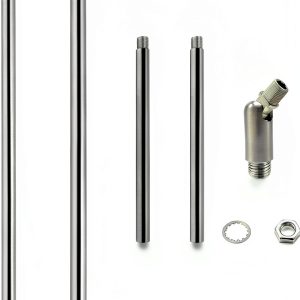 ECUDIS Downrod Stem Kit Brushed Nickel Lighting Fixture